A home inspection report can run dozens of pages. It is tempting to paste it into a Large Language Model (LLM) like ChatGPT and ask, “What will all of this cost?” We wanted to see what that answer looked like, so we compared a ChatGPT repair estimate with a QwikFix quote for the same home. We used ChatGPT for this test, but the limits we found are not unique to it. Any general-purpose LLM faces the same problem.
The report came from a 1972 manufactured home in Southern California and listed 52 numbered findings. A finding is one issue an inspector flagged, such as a loose railing or a missing smoke detector, often with a recommendation for what to do next.
ChatGPT repair estimate vs. QwikFix quote
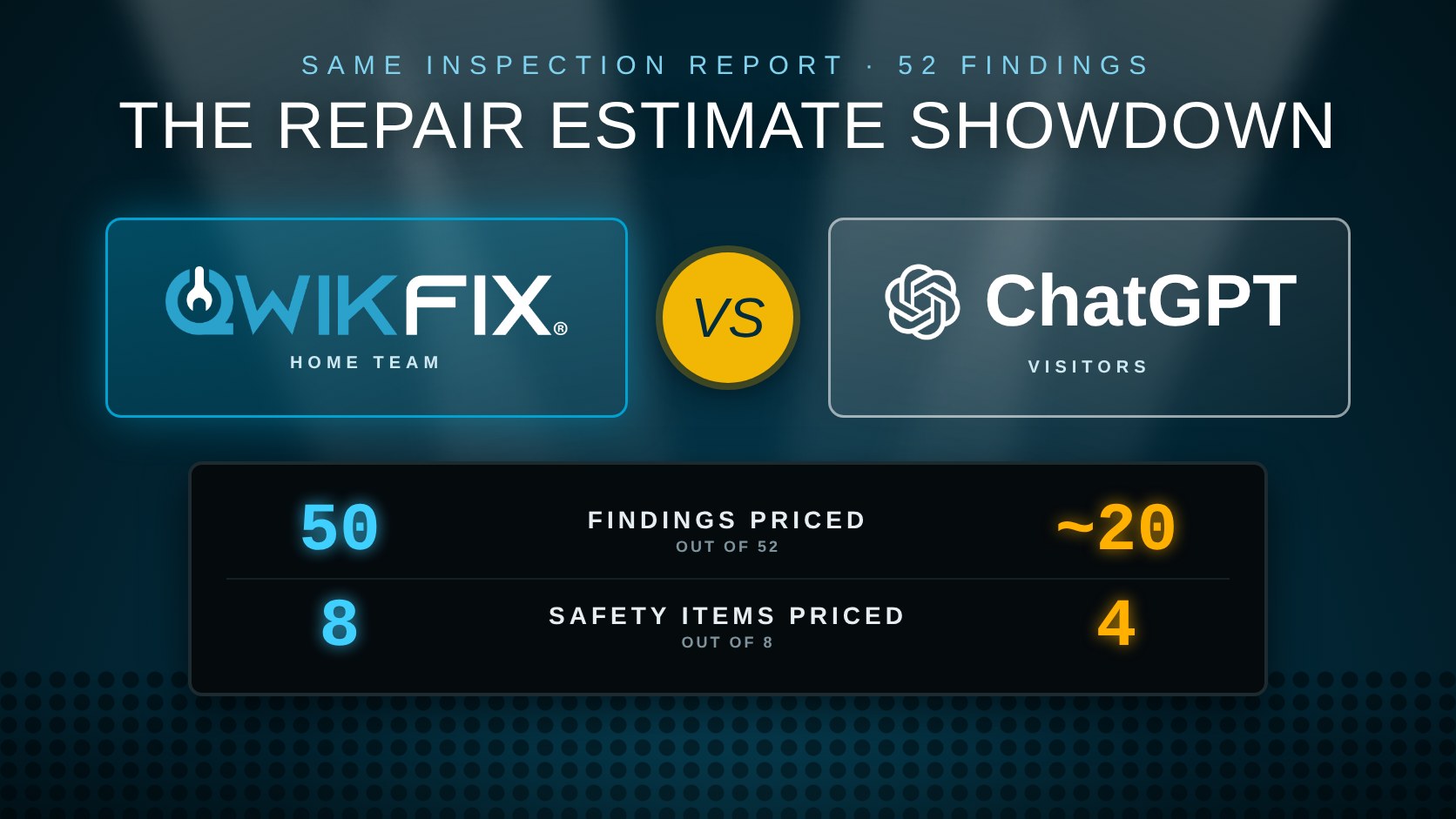
ChatGPT put a price on about 20 of the 52 findings. The other 32 had no price. The report flagged eight safety items. ChatGPT priced four of them.
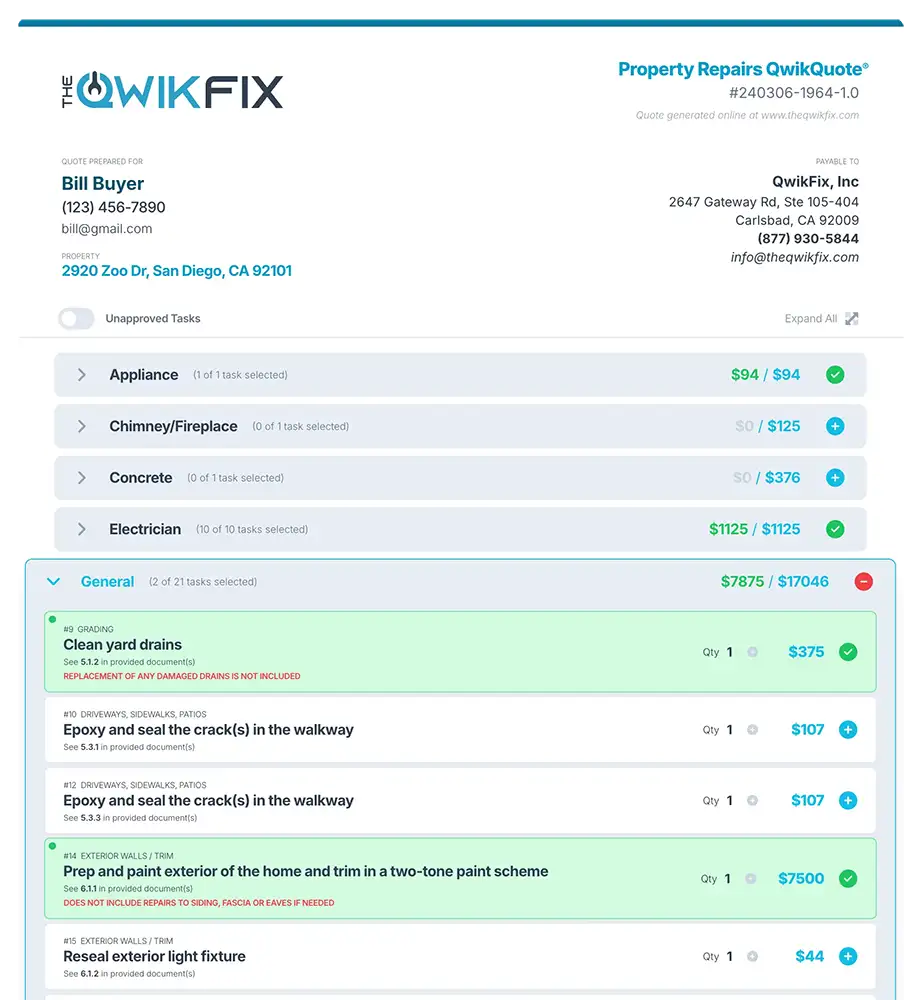
The QwikFix quote priced 50 of the 52 findings, including all eight safety items. Each priced line was tied to its finding number so a reader could check it against the report. This is also critical when the repair request form becomes part of the real estate transaction contract.
| ChatGPT estimate | QwikFix quote | |
|---|---|---|
| Findings priced (of 52) | About 20 | 50 |
| Safety items priced (of 8) | 4 | 8 |
| Patio, finding 3.2.3 | Tear out and replace the concrete, $6,000 to $12,000, plus a structural and foundation evaluation | Grind and level the surface, then seal the crack. $300 |
One finding, two different scopes
Finding 3.2.3 described a cracked patio. The inspector recommended repairing it so the surface would be level and smooth, reducing a trip hazard. A trip hazard is a raised edge or gap that can catch someone’s foot.
The ChatGPT repair estimate proposed tearing out and replacing the concrete, with a price range of $6,000 to $12,000, plus a structural and foundation evaluation. The finding itself did not mention structural, foundation, or soil concerns. If you are a real estate agent, does a wide range plus extra evaluations help you close the deal, or does it spook a buyer?
The QwikFix quote followed the inspector’s stated recommendation: grind and level the surface, then seal the crack. The important question is not which number looks better on its own. It is whether the estimate prices the work the report actually describes, and whether vetted pros can complete it. The QwikFix line is a $300 repair that vetted contractors in our network can schedule and complete as written.
Why the scope matters during a transaction
If you are buying, a repair list may support a request for a seller credit. A seller credit is money off the purchase price to help cover repairs. If the report calls for leveling a patio but the estimate assumes a full replacement, the other side can reasonably challenge that request.
If you are selling, an oversized scope can make necessary work look more expensive than it is and put pressure on your asking price. Either way, a number that does not match the finding can create confusion and cost someone money.
Why LLMs can miss the mark
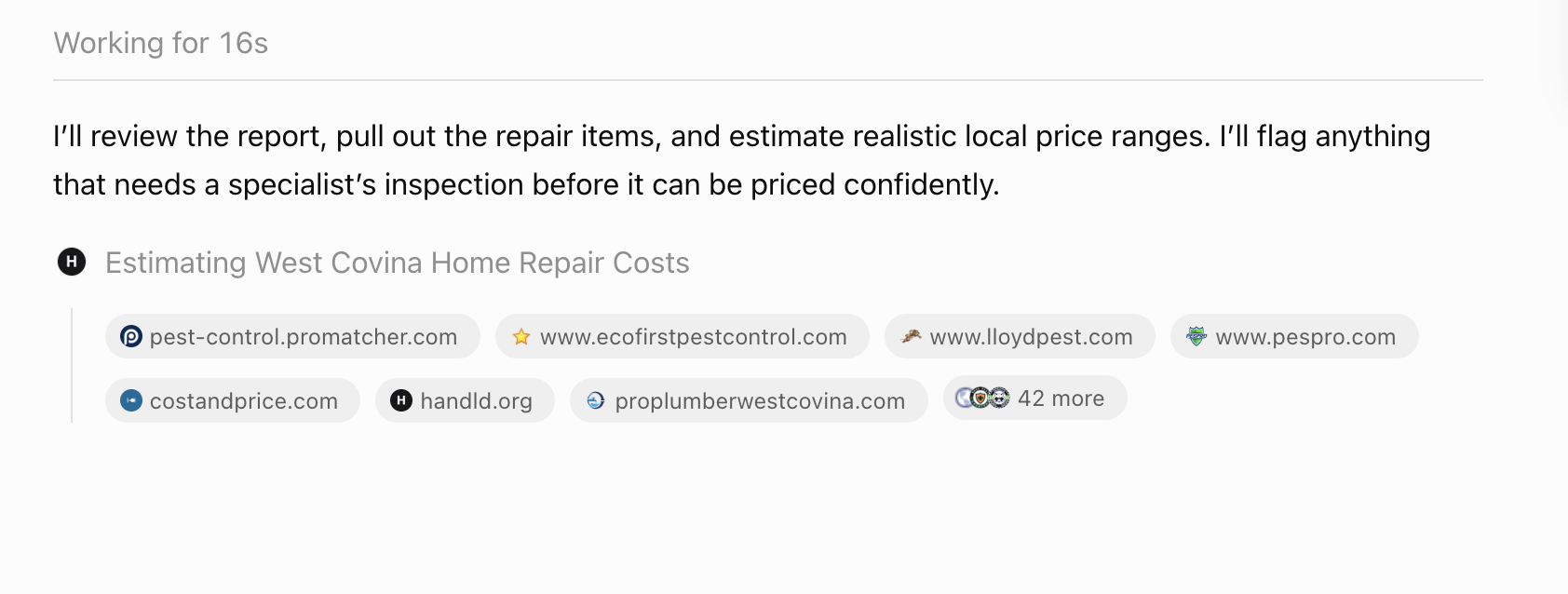
A general-purpose LLM can explain repair concepts and organize information. On its own, though, it does not have a verified record of local repair prices and completed jobs to check against. When it does look up prices, it searches the web and pulls from cost guides and contractor marketing pages, such as local pest control and plumbing company sites. Those are published averages and sales pages, not records of completed work. When a finding is brief or unclear, it may fill in the gaps with a bigger repair. When a report is long, it may leave some findings unpriced.
A more detailed prompt can help clarify what you want. It cannot supply pricing evidence the tool does not have.
What makes an estimate usable
A useful estimate does more than produce a total. It describes a specific repair, connects that work to the inspection finding, and gives a contractor enough detail to review and schedule it. Check for three things.
- Price the repair the inspector recommended. Where more investigation is needed, the estimate should say so.
- Tie each line to its finding number. That makes the scope easy to check against the report.
- Use local pricing evidence. The estimate should explain what each line includes.
A repair estimate is most useful when it becomes a clear next step, not just another number in the negotiation.
When an LLM is still useful
An LLM is not the wrong tool for every part of the process. It can help when:
- You want to understand the report. It can explain unfamiliar terms in plain language.
- You want to prepare questions. It can help you organize questions for your inspector, agent, or contractor.
- You want to sort the findings. It can group items by system, such as roof, plumbing, or electrical.
The line to draw is pricing. Use an LLM to understand the report, then get a priced quote before you negotiate.
How QwikFix helps
QwikFix turns a home inspection report into a priced repair quote, line by line. Each line is tied to the finding it covers. Our Small Language Model (SLM), an AI model trained for one job, reads each finding and identifies the repair it calls for. Then our pricing data, drawn from repairs completed on our platform, sets the price. The number you see is based on real jobs, not a guess.
Your Home Repair Advocate walks you through the quote and helps you decide which items to fix, which to ask a credit for, and which to leave alone. Then they schedule the work with vetted contractors in our network. You choose what gets done, and you see the cost before you commit.
Have an inspection report? Upload your inspection report and get a line-by-line quote before you negotiate.
About this comparison
- Inspection report: A 1972 manufactured home in Southern California, 52 numbered findings, 8 flagged as safety items.
- ChatGPT repair estimate: ChatGPT, a general-purpose LLM, given the same report.
- QwikFix quote: A QwikFix quote for the same report, using our proprietary SLM to read the findings and our completed-job data to price them.
for competitive home repair quotes.